100 metres underground, the margin for error gets pretty small.
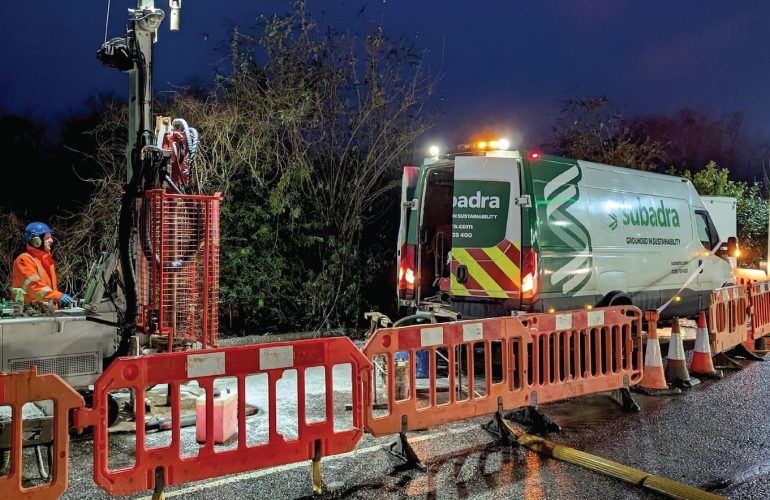
On a recent project, the Subadra team drilled a 100m borehole for the installation of a cathodic protection system.
Reaching the required depth was only part of the job.
The borehole needed to remain stable and suitable for the engineered installation, followed by the installation of the vent pipe, anode string, sacrificial cathodic coke breeze tremmied to depth and bentonite backfill.
It is specialist work that brings together drilling experience, an understanding of ground conditions and the ability to deliver an engineered installation deep underground.
What is cathodic protection?
Buried steel infrastructure is exposed to conditions that can cause corrosion over time. For assets expected to remain operational for decades, controlling that corrosion is an important part of protecting their integrity and extending their service life.
Cathodic protection is an electrochemical technique used to control corrosion by making the structure being protected the cathode of an electrochemical cell.
One approach is an impressed current cathodic protection system, where an external power source and anodes provide a protective current to the structure.
For pipelines and other large buried assets, those anodes can be installed in deep boreholes, known as deep anode groundbeds.
Why specialist drilling matters
Creating a 100m borehole for this type of installation is very different from simply reaching a specified depth.
Ground conditions can change as drilling progresses and borehole stability has to be carefully managed. The completed borehole also needs to accommodate the cathodic protection engineer’s installation.
That means thinking about what needs to happen in the borehole long before the drilling is finished.
Specialist projects like these can sit outside the normal remit of many drilling contractors because the drilling itself is only one element of the work. The installation that follows introduces additional technical challenges and risks that need to be understood and managed throughout the project.
Experience matters, particularly when conditions underground do not behave exactly as expected.
Turning engineering design into an installation
Cathodic protection systems may begin with engineering calculations and designs, but ultimately those designs have to be delivered in the ground.
Subadra’s role is to help bridge that gap.
By combining specialist drilling with practical installation experience, our team can work alongside cathodic protection engineers to create the borehole and complete the specialist installation required within it.
It is a niche area of ground engineering, but an important one.
Cathodic protection is used across pipelines, utilities, fuel infrastructure, storage facilities and other buried metallic assets, helping protect infrastructure that may need to remain operational for many years.
Much of that infrastructure is hidden beneath our feet.
And sometimes protecting it means going 100 metres below them.
Get in touch with the Subadra team about specialist drilling and cathodic protection installations.